
Originally published in Travidition Magazine, Vol. 1, Issue 1 (2011). Some practical details such as prices, opening hours and venues may have changed; check current information before you travel.
Frances Stanford explains why tea is China’s national drink, from legend to weddings.
Frances Stanford’s short guide covers the legend of Emperor Shennong, the main types of Chinese tea, tea houses, serving tea as a sign of respect and how to brew it. A section added in 2026 covers UNESCO recognition and the history of tea.
Ask for a table in a Chinese restaurant and the first question will be which tea you would like. Frances Stanford explains why tea sits at the centre of Chinese social life.
The original article by Frances Stanford
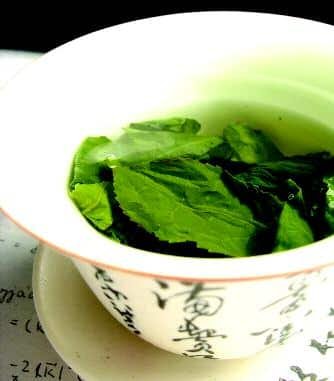
Tea is the national drink of China and is consumed by young and old alike. When you enter a restaurant the first question you will be asked is what type of tea you would like to have.
The practice of tea drinking dates back to 2737 B.C. to the days of the Emperor Shenong, who was afraid of getting a disease from the water and wanted all the water used for drinking boiled.
One day as the staff was boiling the huge pots of water some of the leaves of the Camellia sinensis tree fell into this water. The Emperor fell in love with the resulting taste and thus the tea culture of China was born.
There is a variety of tea trees grown in China, which results in different regions of the country having their own specialties. These are:
- green tea
- scented tea
- black tea
- compressed tea
- Wulong – a variety that falls somewhere in between green and black tea.
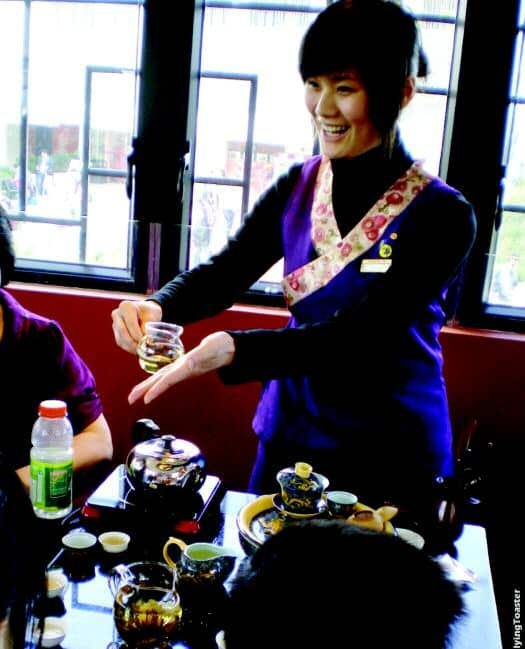
Each type requires different techniques in the production of the tea leaves. During the heat of the summer, tea drinking seems to help the body cool down. In just about every town and village of China there are tea trees growing in abundance. Tea-houses abound and people gather together in these locations to chat over a cup of tea.
The drinking of tea in the culture of China serves several important functions. Serving tea is seen as a sign of respect. The younger people serve the elders and in the past the servers were always those of a lower social status. This has changed today, though, and in the homes of the country it is possible to see older people serving tea to the younger members of the family.
When one person needs to apologize to another for whatever reason, the general custom is to pour tea for them. This comes from the subservient nature of the tea servers in the history of the country. It is also a way of expressing thanks to another to serve tea to this person.
In a Chinese wedding ceremony, for example, the bride and groom serve tea to their parents.
There are many ways in which tea is brewed in China, with the most common one being the simple act of adding tea leaves to a pot of boiling water. Green tea, however, should be brewed in cooler water because of its delicate nature.
Added by Travidition editors (not part of the original article)
More on Chinese tea traditions
Tea comes from the leaves of Camellia sinensis, a plant native to south-west China. The Chinese word is cha; the English word “tea” probably comes from the way the drink is pronounced in Fujian province. Legends about its discovery vary. The account above credits Emperor Shennong, while another popular story credits the Indian monk Bodhidharma. Historians trace regular tea drinking by Buddhist monks, who used it to stay awake while meditating, to about the 2nd century BCE. By the Tang dynasty (618–907 CE) tea had spread beyond the monasteries and become popular with the gentry, and tea merchants were among the richest in China.
In the 8th century the writer Lu Yu produced a treatise on the forms and conventions of drinking tea, which shows how far tea had become a refined art. Fine ceramics grew alongside it. The potters of Yixing in Jiangsu province, for example, became famous for their teapots.
Today the range is enormous. According to UNESCO, Chinese tea producers have developed six categories of tea: green, yellow, dark, white, oolong and black. Adding reprocessed teas, such as flower-scented teas, brings the total to more than 2,000 tea products. Tea is served, steeped or boiled, in homes, workplaces, tea houses, restaurants and temples, and it is part of ceremonies such as weddings. In 2022 UNESCO added “Traditional tea processing techniques and associated social practices in China” to its Representative List of the Intangible Cultural Heritage of Humanity. The listing covers plantation management, leaf picking, manual processing, drinking and sharing.
For a visitor, the practical lesson is simple. When you sit down and are asked which tea you want, you are joining a living tradition. Accept the cup graciously, notice who pours for whom, and ask what the house recommends.
Frequently asked questions
What are the main types of Chinese tea?
The article lists green, scented, black and compressed tea, and Wulong (oolong), which falls between green and black. UNESCO describes six categories: green, yellow, dark, white, oolong and black.
Why is serving tea a sign of respect?
In the article, younger people serve elders, and in the past servers were of lower social status. Pouring tea can also be a way to apologise or to say thank you.
What role does tea play in a Chinese wedding?
The bride and groom serve tea to their parents, according to the article.
How should green tea be brewed?
In cooler water, because of its delicate nature. The most common method is to add leaves to a pot of boiling water.
Is Chinese tea culture recognised by UNESCO?
Yes. In 2022 UNESCO inscribed “Traditional tea processing techniques and associated social practices in China” on the Representative List of the Intangible Cultural Heritage of Humanity.
References
- Frances Stanford, in Travidition Magazine, Vol. 1, Issue 1 (2011): the original article reproduced above.
- UNESCO: Traditional tea processing techniques and associated social practices in China
- UNESCO: Decision 17.COM 7.B.2
- China’s government portal: tea-making enters the UNESCO list
- World History Encyclopedia: Tea in Ancient China & Japan