
Originally published in Travidition Magazine, Vol. 1, Issue 1 (2011). Some practical details such as prices, opening hours and venues may have changed; check current information before you travel.
Brandon Schultz shares his insider Rome picks: Trevi at night, the Palatine view and picnics in the Forum.
After a year in Trastevere, Brandon Schultz shares his insider Rome: the Trevi Fountain, the Colosseum, the Palatine, the Forum, the Pantheon, Rome at night and what to skip. This 2011 guide comes with a 2026 update on the Trevi, Pantheon and Colosseum tickets.
No one can tell you more about Rome, Brandon Schultz says, than a person who has lived there for a year. His guide covers the must-sees, the hidden spots and what to skip.
The original article by Brandon Schultz
No one can tell you more about Rome’s history, art, quirks, tourism, food, fashion, and life than I: I have spent my life being obsessed with the Eternal City and a year living in an unbelievable apartment in Rome’s equivalent of SoHo, Trastevere a medieval district overflowing with food, music, and all things beautiful ranging from centuries old frescoes eroding on walls to vines hanging from rooftops and stretching to the narrow, cobblestone streets strutted upon with Prada heels and Ferragamo loafers by model-esque Italians licking cones of exquisite gelato and heading to a coffee bar (not a Starbucks) for the world’s best cappuccino.
The Roman citizens take for granted their historical masterpiece of a home; they use the Trevi Fountain as a place for merely meeting up with old friends before heading to lunch; they attend church services at Santa Maria in Trastevere (yes, “in” is an Italian word!), the oldest Catholic church in the world, decked with Cavallini mosaics from the 1300’s; and they have concerts outside the Colosseum (please learn this correct, English spelling of the structure and stop butchering it!), using it as a backdrop for laser light shows.
Where else in the world are history and art so engrained in the natural customs of life that a citizen does not think twice when walking the famous Via Sacra (The Sacred Way), the same stone walkway traversed by Julius Caesar and Augustus? Such is the life of the Roman. Whether you have two weeks or two days to spend in this unique city, you will find yourself indulging in the best the world has to offer at present day while learning about the most powerful and influential people the world has ever offered in the past.
There are many “must sees” when visiting Rome for the first time, but there are also numerous sites and experiences that are missed by most who never had the luxury of spending a year there to hunt for the treasures. Luckily for you, I already did the research and now you can reap its rewards.
The Trevi Fountain (Fontana di Trevi)
If you want to see a work of masterful beauty, do not miss the Trevi Fountain. Though the Trevi is not a part of ancient history, it is still nearly 400 years old and intact. If you only get to see one of the many fountains of Rome, this is the one to see. Be forewarned, you will encounter dozens of men trying to sell pointless trinkets to you.
Do not accept a rose from anyone and do not let anyone take a picture of you with his camera . Feel free to trust other tourists to take a picture of you throwing a coin into the fountain, but do not let a professional take your photo—he will charge you enormously for this service.
The same is true of the roses: even if he tells you the rose is free, once you accept it, he will harass you for money. Take plenty of time to soak in the joy of the Trevi Fountain, but just do not accept anything from anyone here.
The Colosseum
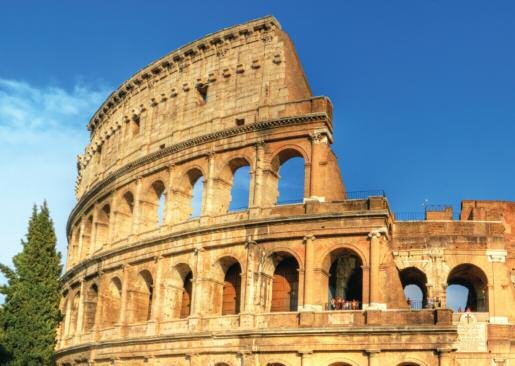
This imposing structure stands proudly in the center of Centro Storico (the historic district) and you will never need to ask directions to find it! Almost 2,000 years old, the Colosseum has been home to exciting games, barbaric ceremonies, impressive theater, and has even served as an apartment building in the medieval years.
With such abuse, it is no wonder that the interior is nearly gutted and looks nothing like you would imagine a stadium of such proportion to be.
There is not even a floor in the center, anymore (though this affords you the opportunity to see below into gladiatorial holding cells).
In short, the view outside is much more impressive and does not cost you any money. If you cannot resist the urge to go inside and you indeed purchase a ticket, HOLD ON TO IT because you can use it again for free admission to the Palatine Hill, a gem that most tourists miss.
The Palatine
The Palatine hill is the most exciting of Rome’s seven famous hills and is home to many hidden treasures. The Flavian Palace is a remarkable structure that has been excavated and is yours for exploration. In addition, there are several other Imperial homes and artifacts scattered about the hill’s beautiful walkways and vegetation.
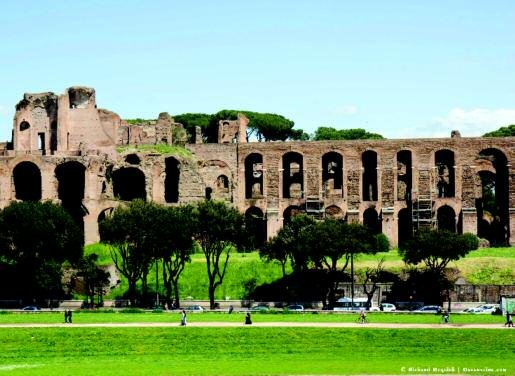
What most people do not realize is that a walk along the Palatine’s paths leads to the most stunning view of the Colosseum available: the PERFECT place for the award winning photograph. Also within view of the top of the hill is a fantastic look into the famous Circus Maximus. Be sure not to miss the small museum that is included in your ticket price. Even if you wisely choose not to enter the Colosseum, spring for the ticket and climb the Palatine.
Circus Maximus (Circo Massimo)
Skip it. It is famous for its races and other games, but it is nothing but a large, grown-in field of grass today. It is a place where Romans walk their dogs and kids frolic in the grass that is rare in this ancient city. The view from the top of the Palatine Hill is all you need to experience the Circus Maximus.
Roman Forum (Foro Romano)
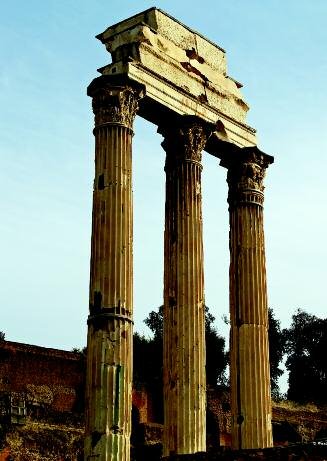
The Roman Forum is the pinnacle of the historical experience in Rome. Inundated with temples, houses, arches, and business structures, it is perhaps the extraordinary amount of column heads, engraved stones, and millennia-old pathways that create the awe and mystery of this former center of Roman life. I strongly suggest devoting a large amount of time to exploring the ruins of the forum and ABSOLUTELY recommend purchasing a guide book to divulge the vast body of knowledge available. I personally have enjoyed picnics in the Forum, and I strongly suggest you buy some sandwiches and drinks and do the same—just find an ancient column head or stone to sit on and enjoy your meal in the center of history.
A special note for you lucky readers: come back to the Forum at night, when the temples and imposing columns are majestically lit from below. To access the most incredible view of this splendor, see the section called “Rome at Night.”
Monument to Victor Emanuel
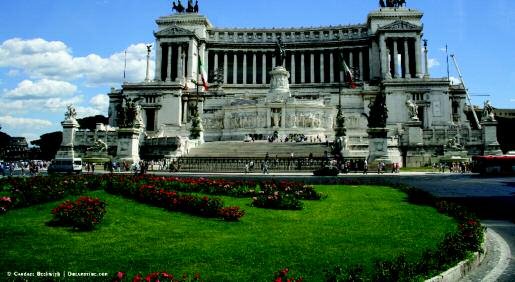
This is the largest and most easily located structure in the city. Built to rival the size of St. Peter’s Basilica in Vatican City, it encases a military museum, a tomb, an enormous bronze statue that can only be properly appreciate up close, and a completely view of the entire historic district of Rome. Often called the Wedding Cake or Typewriter by Romans, this monument is completely free to access and you definitely should undertake the climbing of its many stairs.
Once on top, the view from all sides is one that includes numerous other monuments and an overlook of the city that has been bustling for two thousand years. At the top, do not forget to look up at the masterfully painted ceilings of this incredible structure.
The museum inside is rather small and not very interesting to those who are not obsessed with military history, so skip it if you are on a limited time-budget. Just hike the monument and be sure to check out the views from both ends!
Rome at Night
I strongly urge you to return to the Roman Forum and the Trevi Fountain as late as you willing to stay up and walk about the city. I have done this many times at 3 AM, but you can do this as early as midnight and still have a similar experience. To the Forum properly, head to the top of the Capitoline hill, go to the right of the central building with the beautiful fountain, and walk under the arch. A very short walk straight ahead will lead you to a stone wall that overlooks the entire Roman Forum and, from here, at night, the view is both humbling and energizing. Spend some time reflecting on history and beauty from this amazing, generally hidden spot.
Going back to the Trevi at night allows you to enjoy this fountain without other tourists, so you can hear the lulling roar of the rushing water and see the beautiful lights ascending from the water towards the magnificent sculptures. I would often bring some takeout Chinese food and eat it while staring at the Trevi in the middle of the night—my own personal escape spot. It is amazing how different the fountain is at night when no one else is there. Try it.
The Janiculum Hill
A lesser known hill in Rome, I recommend climbing the Janiculum early in the day and being at the top by noon. Not only does the wall at the top of the hill provide a breathtaking view of the entire city, but here you will find the canon that is blasted every day at noon. It is exciting to witness this otherwise trivial part of daily Roman life and the photo-ops from this point are priceless.
The Capitoline Hill
This is the hill located next to the Monument to Victor Emanuel and characterized by an enormous staircase leading to a medieval church and a beautiful ramp/obscure staircase flanked by Michelangelo’s sculptures of the mythical Alexis and Corydon with their horses. At the top of this hill are a beautiful piazza and a museum also designed by Michelangelo during the Renaissance. The museum is of average quality, but the beauty of the piazza is worth the easy trip to the top of this hill.
The Pantheon
The Pantheon is the world’s only ancient building surviving in its entirety today. It has served as a temple to all gods, a court under the emperor Hadrian, and is now the tomb of Rome’s first modern King and Queen and the artist, Raphael. What is perhaps most remarkable about the Pantheon, though, is that it is an engineering marvel: its enormous dome is entirely made of concrete and is perfectly round.
Experts have demonstrated that a tremendous ball would fit perfectly inside of the painstakingly precise dimensions of the Pantheon. Engineers suggest that the Pantheon should have crumbled under its weight over centuries of standing, but it has, nonetheless, withstood the test of time, including two severe earthquakes.
The Pantheon is free to enter and will truly give you a sense of Roman grandeur. While you are there, check out the beautiful fountain in the Pantheon’s Piazza. Side note: when facing the Pantheon, the gelato shop to the right serves the most extraordinary Rose and Orange Chocolate flavored gelato. Eat it.
The Rest
There are HUNDREDS of monuments, museums, and sights (both famous and lesser known) to be seen in Rome. This list is intended to share the most essential spots that must be visited with a view hidden treasures that will allow you to appreciate Rome in a way that most tourists do not. Try to visit the Mouth of Truth, Tiber Island, the magnificent churches, and, of course, the Vatican City.
Check out the Spanish Steps if you have time to spare, but do not go out of your way to trek there if you are pressed for time or energy: nearly all visitors find them to be a great letdown. Spend some time shopping at Valentino (or strolling and window shopping!) on Via Dei Condoti, and eat as much gelato as you possibly can.
Drink wine outside as you walk the streets, because this is legal in Italy and a very enjoyable experience. Most importantly, DRESS UP and just wander the streets at night: Romans live to dress beautifully and walk amongst each other every night, enjoying La Dolce Vita (the sweet life). Be part of it. Oh, and any chance you get, eat outdoors. And if you go to McDonald’s while you are in Rome, smack yourself. Buon Viaggio!
Frequently asked questions
Is the Trevi Fountain still free?
You can look at it for free from the square. Since 2 February 2026, non-residents pay €2 to enter the inner perimeter near the basin. Rome residents, children under 6 and some other groups enter free.
How much is the Pantheon?
The full price rose from €5 to €7 on 1 July 2026. Entry is free for under-18s, Rome residents and on the first Sunday of each month, and tickets come from the official Musei Italiani channels.
How does the Colosseum ticket work now?
The €18 ticket covers one timed Colosseum entry and one Forum and Palatine entry within 24 hours before or after the booking. The magazine’s tip to keep your Colosseum ticket for the Palatine is now built into the combined ticket.
What does the author recommend at night?
Return to the Roman Forum and the Trevi Fountain late. He has done it at 3 AM. He suggests the wall by the Capitoline Hill for a view over the Forum, and the Trevi without the crowds.
What does he say to skip?
The inside of the Colosseum if you are short on money (the view outside is more impressive and free), the Circus Maximus (a grassy field today), the Monument to Victor Emanuel museum and, for most visitors, the Spanish Steps.
References
- Brandon Schultz, in Travidition Magazine, Vol. 1, Issue 1 (2011): the original article reproduced above.
- Fontana di Trevi: official site (visit and tickets)
- Turismo Roma: Trevi Fountain, new entry fee
- Reuters: Rome introduces Trevi Fountain access fee
- Direzione Musei nazionali Roma: Pantheon
- Musei Italiani: Pantheon tickets
- Parco archeologico del Colosseo: Colosseum, Roman Forum and Palatine
- Parco archeologico del Colosseo: opening times and tickets