


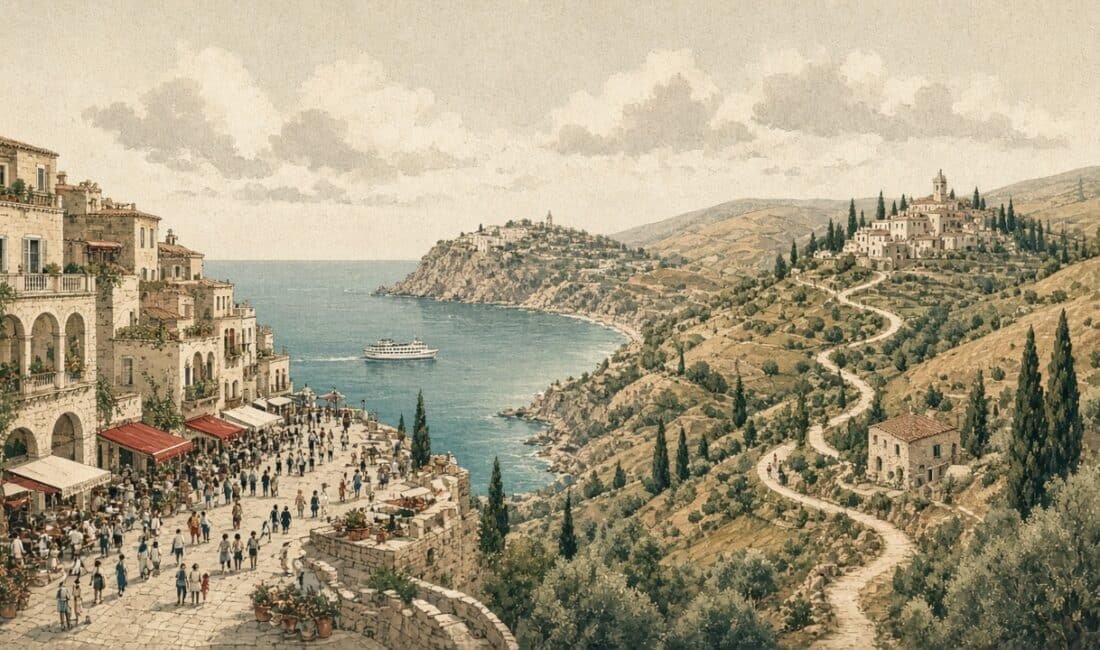
Europe plans to spread tourism benefits while easing pressure on its busiest destinations.
The European Commission’s new tourism strategy puts residents and destination capacity at its heart. Management proposals are scheduled for the second half of 2027, alongside training plans, rather than an immediate system for redirecting holidaymakers.
- 4 Nov 2026Commission strategy date
- Late 2027Management proposals scheduled
- CooperationPlanned cruise dialogue
- Late 2027Academy launch scheduled
A different measure of tourism success
Europe’s tourism success has an uncomfortable underside: a destination can be wildly popular and still become harder to live in. The European Commission’s Sustainable Tourism Strategy, dated 4 November 2026, addresses that tension by seeking a better balance between visitor demand, local capacity and community wellbeing.
The practical next step is not an EU instruction telling travellers where to go. The Commission plans a draft Council Recommendation on Balanced Tourism Management and a common toolbox. Its published timetable places both in the second half of 2027, when development of a shared tourism management model is also due to begin.
That distinction matters. A strategy has been adopted; the promised management instruments have not yet arrived. Reports suggesting guidelines within six months should not be read as the official delivery deadline. For residents tired of packed streets, Brussels is offering a framework for future cooperation—not an overnight release valve.
The busiest destinations need breathing room without exporting their problems
The busiest destinations are the clearest test of the strategy’s ambition. The Commission wants demand matched to a place’s capacity, with year-round tourism and better connections helping lesser-known areas benefit. Its communication identifies strong seasonality, rather than treating every destination as equally crowded.
Moving visitors is not automatically a solution: the policy challenge is to support communities receiving them, not simply move pressure elsewhere.
Cruise arrivals require local coordination rather than another sweeping promise
Cruise arrivals bring business, but their impacts need careful management. The strategy envisages a Cruise Cooperation Dialogue involving governments, local authorities, industry and civil society, covering visitor flows alongside sustainability and connectivity.
This is planned cooperation, not an adopted EU cruise cap or a binding timetable for ship arrivals. Port communities should judge it by practical results, not by the promise of another meeting.
Better tourism depends on skilled workers as well as destinations
Better tourism also depends on the people delivering it. The Commission plans an EU Tourism Academy, supported by education and training institutions, with launch scheduled for the second half of 2027.
The academy is a future initiative, not a training service already available to employers. Its value will depend on whether pooled learning programmes help businesses and destinations develop the skills that managing tourism demands.
Frequently Asked Questions
Has the EU introduced new tourist limits?
No. The strategy does not itself introduce an EU-wide tourist cap or booking restriction.
When are the visitor-management tools due?
The official annex schedules the draft Council Recommendation and common toolbox for the second half of 2027.
Will destinations have to follow one identical model?
The strategy envisages shared approaches adaptable to local circumstances, not one identical visitor policy everywhere.
What does the strategy propose for cruises?
It envisages a Cruise Cooperation Dialogue on issues including sustainability, connectivity and visitor-flow management.
Is the EU Tourism Academy already open?
No. Its launch is scheduled for the second half of 2027.
Conclusion
Europe does not need to choose between welcoming travellers and protecting the places they love. It does need to stop confusing growth with success. This strategy offers a route towards that change, but the decisive management tools remain ahead, with the official schedule pointing to the second half of 2027. Until then, no traveller should mistake the announcement for a new EU booking restriction, and no community should be promised instant relief. The real test will be whether cooperation improves daily life in busy destinations while giving other communities a fair, sustainable share of tourism’s opportunities.
Bibliography / Sources
- European Commission. (2026, November 4). EU sustainable tourism strategy (COM(2026) 777 final) [Communication and annex]. Official strategy and implementation timetable