



South Korea plans to add international flights at regional airports and let visitors pay transit fares with ordinary bank cards, part of a push to spread tourism beyond Seoul.
How South Korea Plans to Steer Foreign Visitors Beyond Seoul
South Korea wants more of its foreign visitors to explore the country beyond the capital. The Ministry of Culture, Sports and Tourism (MCST) said on November 3 that it plans to expand international flights at regional airports and make public transport simpler for tourists to use, Aju Press reported.
Working with the Ministry of Land, Infrastructure and Transport (MOLIT), the ministry is weighing more flight slots at regional airports and priority for international flights bound for Korea. It is also reviewing payment changes that would let travelers pay fares with an ordinary credit or debit card instead of buying a separate transit card.
The aim is to support the government’s target of 30 million inbound tourists by drawing more of them outside the Seoul metropolitan area.
Regional Airports Could Gain New Slots and Priority for Inbound Flights
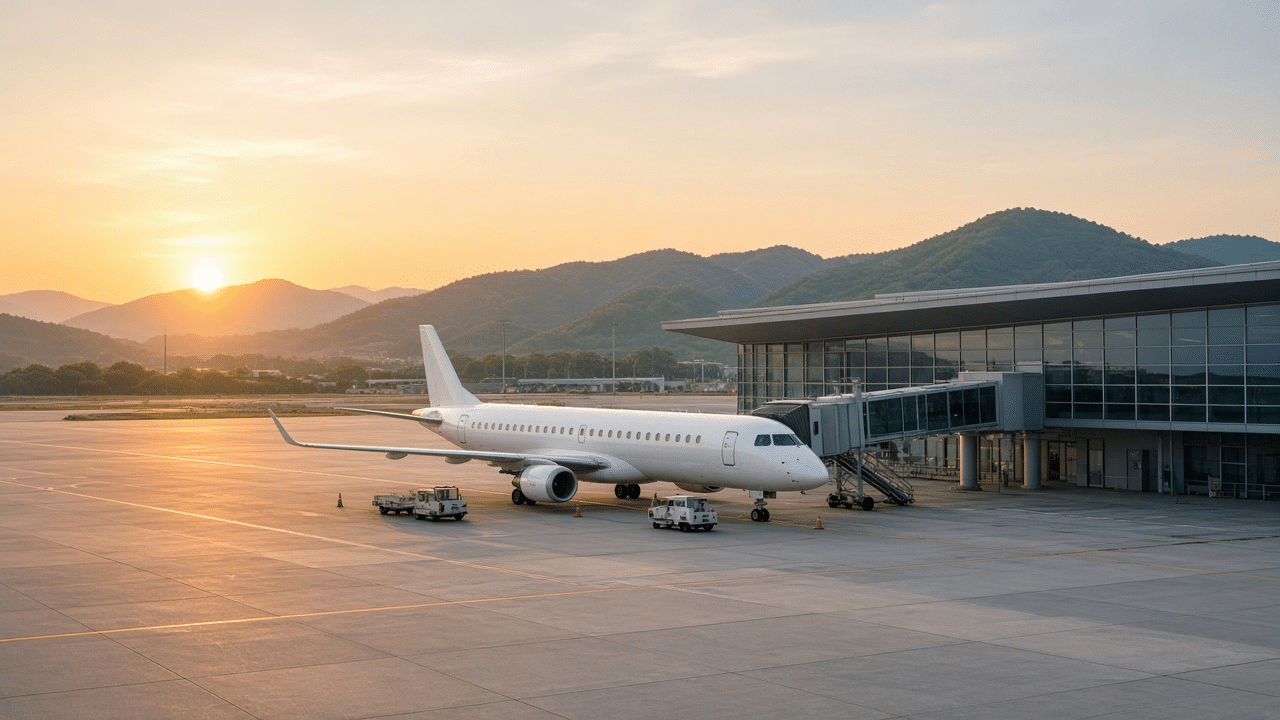
Regional airports sit at the centre of the plan, discussed at the third joint tourism and transport policy meeting at the Government Complex Sejong on November 2. According to The Asia Business Daily, MOLIT wants more international routes so that tourists can land in the regions without first passing through Incheon International Airport. MOLIT will also work on rail, bus and taxi links between airports and regional destinations.
Open-Loop Bank Card Payments Would Simplify Buses, Trains and Subways
An open-loop payment system was also on the agenda, letting riders pay fares directly with credit or debit cards issued overseas instead of buying or topping up a transit card. Officials also reviewed easier rail and bus access and better taxi and map services, noting that regional tourism is hard to grow if local transport frustrates visitors.
Joint Council Ties Transport Fixes to the 30 Million Visitor Goal

The joint council behind the plan was set up by the two ministries in May to tackle obstacles visitors face from arrival onward. Its proposals will be considered for joint government projects in 2027, alongside regional tourism brands that encourage longer stays. Around eight officials from both ministries take part, and the plans are due for discussion at the National Assembly in December. Kang Jung-won of the MCST said sharing record inbound gains with the regions is the key task.
Frequently Asked Questions
What is South Korea planning for regional airports?
MOLIT plans to add flight slots at regional airports and give priority to international flights bound for Korea.
Will tourists be able to pay transit fares with a bank card?
The government is reviewing an open-loop system that would accept ordinary credit or debit cards, including cards issued overseas, instead of a transit card.
Why does Korea want more tourists outside Seoul?
Officials want to spread the benefits of record foreign arrivals to the regions and support the target of 30 million inbound tourists.
Where and when were the measures discussed?
At a joint MCST and MOLIT meeting at the Government Complex Sejong on November 2, 2026.
When could the changes take effect?
No start date has been announced; proposals will be considered for joint government projects in 2027.
Conclusion
South Korea is pointing its tourism strategy toward the regions. By adding international flights at regional airports, prioritising Korea-bound services and moving toward fares payable with ordinary bank cards, the tourism and transport ministries hope to make it easier for foreign visitors to go beyond the usual Seoul-only itinerary. Better rail, bus, taxi and map services, plus regional brands built around longer stays, are part of the same package. The measures are still under review, with proposals to be weighed for joint government projects in 2027, but they show how Korea intends to reach 30 million inbound tourists.
Bibliography / Sources
- Yoo, J. (2026, November 3). South Korea seeks to boost foreign tourism in regional cities [News article]. Aju Press. https://www.ajupress.com/view/20261103145107265
- Kim, H. (2026, November 2). To bring foreign tourists to regional areas… expand international flights, lower transportation and payment barriers [News article]. The Asia Business Daily. https://www.asiae.co.kr/en/article/2026110202003428390
- Seoul Economic Daily. (2026, November 2). Korea to expand international flights at regional airports [News article]. https://en.sedaily.com/culture/2026/11/02/korea-to-expand-international-flights-at-regional-airports