
Originally published in Travidition Magazine, Vol. 1, Issue 1 (2011). Some practical details such as prices, opening hours and venues may have changed; check current information before you travel.
Peggy Tee’s whirlwind weekend takes in Sacré-Cœur, the Moulin Rouge, the Louvre and the Eiffel Tower.
Writer Peggy Tee spent a weekend in Paris riding the Métro between Sacré-Cœur, the Arc de Triomphe, Sainte-Chapelle, the Musée d’Orsay and the Eiffel Tower, with a Moulin Rouge show in between. This 2011 diary comes with a 2026 update on Métro fares and Notre-Dame.
Two days is not much for Paris, but Peggy Tee’s diary shows how much a weekend can hold when you travel by Métro and keep moving. Her route runs from Montmartre to the Eiffel Tower, the Louvre and the Musée d’Orsay.
The original article by Peggy Tee
Paris is a city teeming with cliches, all of which I skirt around and skip over; Paris of the movies has little appeal for me.
We head up to Sacre Coeur (Sacred Heart), on Montmartre, a confection of creamy white Byzantine and French architecture. It’s a Roman Catholic church, with a huge, glorious mosaiced dome on the inside. The view from the top of the hill is marvellous, stretching across the Parisien skyline. As we leave, a group of buskers sings Aicha, a favourite of mine, but in its original French; we linger on the steps leading up to to the church and listen while the sky turns grey and raindrops gently fall.
Our next stop is the Arc de Triomphe, and we navigate the Metro, with its rubber wheels and latch-opened doors. It’s cheap for a single trip – only EUR1,50, or EUR11,10 for a carnet of 10 tickets. It’s twilight when we reemerge aboveground, and set off towards the colossal hulk of Napoleans’ homage to his Grande Armee. It is in the middle of the Place Etoile – 12 wide, sweeping boulevards radiating from the Arc towards the edges of Paris.
The traffic is horrendously fast and a little chaotic; we cross over by the underpass and ask for “deaux billet tarif reduit” to climb up the Arc. Serendipitously we managed to be in time for the ceremony to restoke the flame at the Tomb of the Unknown Soldier beneath the Arc; complete with war vets bedecked in medals and a brass military band. The view, when we finally climb up, is of a windswept Paris, and the outline of the Eiffel Tower at twilight.
Show at the Moulin Rouge
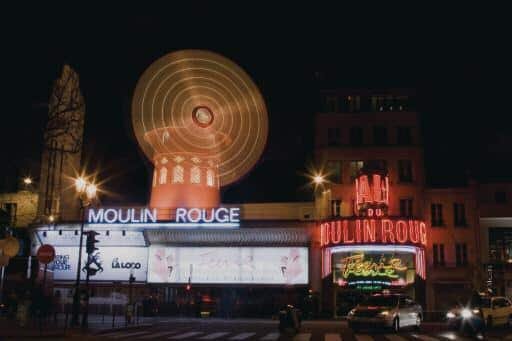
We have an engagement with the ladies of the Moulin Rouge, however, and so rush back to the IXe (9th arrondissement) where we’re based for the weekend, to eat and change.
Dinner is escargot to start, then duck and salmon mains. There is no time for dessert or coffee, and we jump into a cab heading for Pigalle, the red light district, and that famous windmill façade.
It takes forever to check our coats in; then a squeeze in the dark and past warm elbows and knees to get to our seats – the lights have just gone down and the performers are already in their places on stage as we walk into the tent.
Our show is Faerie, the costumes are so elaborate and bejewelled, speckled with so much glitter it is difficult to notice something as ordinary as a little flesh. There are some moderately good voices,and interesting dance choreography; witty costumes and some good variety acts, a passably energetic can can performed in tricolour costumes, a girl swimming in a tank with some bored looking snakes, shelties and a talking dog; otherwise the show is merely entertaining at best.
Parisians out and about
The next morning we have breakfast at a little bar – pain au chocolat and a shared croissant and espressos. It’s a beautiful day; blue sky shredded with fluffy clouds and sunlight on the back of my neck. We walk through the Tuileries, filled with manicured lawns and calm pools and white graceful statues.
There are Parisians out and about; jogging, reading in the sun, a boy lamenting his listing toy sailboat and yelling to his papa to save it. The gardens are huge and it beggars the imagination to think that it was once the inner courtyard of the enjoined Palais Louvre and Palais de Tuileries. The gardens lead up towards the Champs, consumerism HQ and witness to military parades, invasions, and city celebrations. The avenue itself is expansive and wide and generous, filled with shopfronts and tourists. It’s lunchtime, and we head back riverwards, exploring the delicate beauty of Le Petit Palais and the artwork inside it (free entry, and a charming garden were the drawcards), passing by Le Grande Palais, which we would have entered, if we had time, as it has 8 of Monet’s giant Waterlilies paintings.
Lunch is at an overpriced cafe, before crossing Pont Neuf into the islands; we visit St Chapelle first. The Lower Chapel is covered in fleur-de-lis, atmospheric and dimly lit; but the Upper Chapel makes me gasp – all the litreature in the world could not have prepared me for the beauty of its stained glass windows. Walls of scintillating colour. There are over 1000 scenes depicted in stained glass, from Genesis to Christs’ resurrection. We sit for awhile, and watch the light change as sunlight streams through one side of the chapel and makes butterflies of jewelled light on the walls.
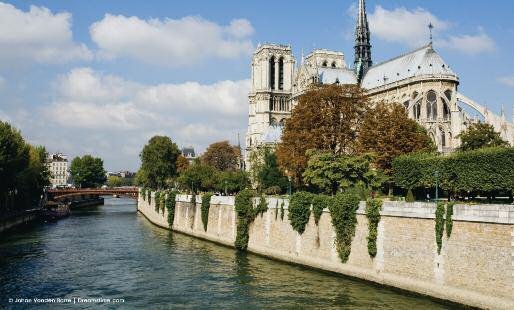
We head to Notre-Dame next; the queue is ridiculously long, so her bells and rose window will have to wait for my second visit to Paris – it’s time for Musee d’Orsay, something I’d been looking forward to since landing in the city.
The Museum is housed in an old train station, and the space is lovely; broken up into galleries and broad steps of housing statues in the main hall; some Rodins are on the mezzanine. The Impressionists are on the top floor, and I wander around in bemused wonder, stopping at every favourite, familiar piece. Monet, Manet, Degas, Renoir – they’re all here, amorpheous suggestion of form and movement and light captured on canvas in oil and charcoals. We stay until the museum starts to close at about 6:30pm; because we’d arrived so late there were less tourists milling around, though the Impressionist rooms are always full.
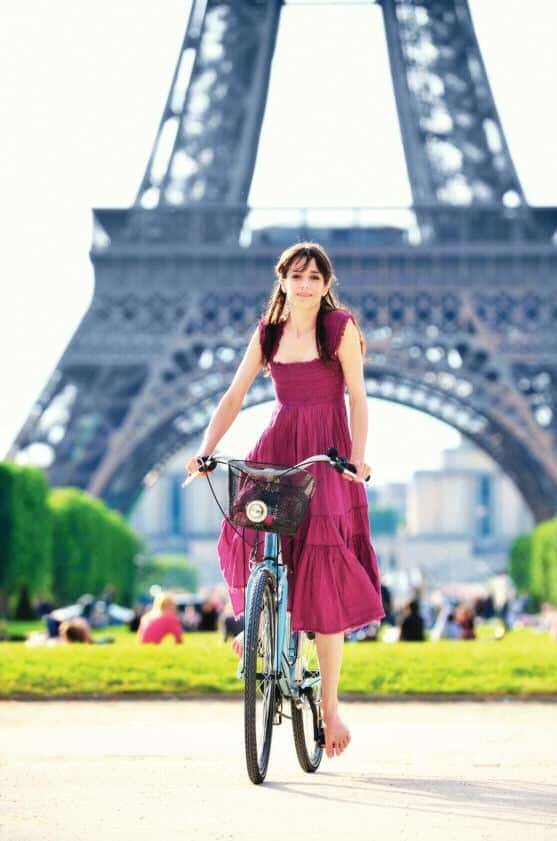
It’s grey outside and cold; we plan to scale the Arc again, and soak in the night view later on. For now though, we trace a path through the metro down to La Tour du Eiffel to pay our respects; we have not seen her from close up just yet; and Paris would not be Paris without going to see her. The Eiffel tower must be one of the most photographed icons of the world.
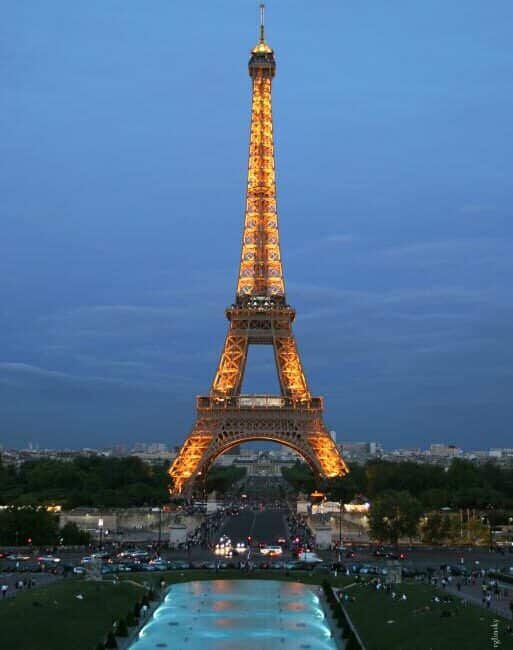
Originally only a temporary exhibition, she has remained a symbol of the city since the late 19th century. She is graceful, and aesthetically severe, all steel rivets and soaring lines, more installation than functional building, and she plays tricks on our perspectives – the tower appears larger the further you move away from her, for some reason. We wander along the parks, under her arches, watch the military men holding big military guns (found at St Chapelle also, and the next day, at the Louvre) watching us, speak Italian back to the gypsies who ask us for money in English (this gets rid of them surprisingly easily) and watch the sliver of sunset behind the clouds.
I buy candyfloss from a vendor by brightly lit carousel; the crowd is mostly tourists or young families. I had never planned to go up the Eiffel – the only viewpoint in Paris where you can’t actually see her in the skyline. We stop for a few minutes so I can sketch her, quickly, in the dying light – she lights up like a glitterball as night slides in, and there is a collective gasp from the crowds come to worship at her feet.
We go in search of dinner, near the Arc – I order steak tartare (raw beef mince) – done perfectly and deliciously spiced; Jeff has french onion soup and chicken. We’re extremely full, but order a creme brulee anyway between us – our waiter winks, laughs, and brings two spoons.
At night Paris is surprisingly quiet – the boulevards are rivers of gold and red light from the traffic that flow through; the Eiffel throws a spotlight into the darkness. The wind rattles the iron barriers, howls around us.
The Louvre is our first stop; after a breakfast at the café around the corner from our hotel. We sit at the bar, order deaux petit dejeuner and ask for pain au chocolat instead of croissants – the meal reminds me of Italian breakfasts standing at the bar. It starts to rain as we enter the grounds of Palais du Louvre, the pyramid is stunning and sculptural and jarring against the façade of the Palais. We grab a map and hit the highlights we want to see – Mona Lisa, because its on the list; Da Vinci’s sfumato paintings like the Virgin on the Rocks; The Winged Victory; Venus de Milo; the Egyptian antiquities, the Objets d’Art and Napolean III’s apartments. There is no time to visit Vermeer, or the other wings of the Louvre, not if we want to also make it to Rodin; so regretfully we leave behind the Grande Galleries pale parqueted halls and elaborately frescoed, trompe de l’œil ceilings.
Rodin’s gardens and the house he stayed in are charming and a quiet respite after the crowds fringing the Mona Lisa at the Louvre. All his famous pieces are there – the Cathedral, the Kiss, the Thinker, the Gates of Hell, The Walking Man, the Burghers of Calais, the Shades. His pieces are raw, unfinished, seething with movement and passion. The trees are bare and the fountains quiet, but there is a peace about the grey sky and expanse of green lawn, the bronze cast statues scattered about the grounds.
Paris, city of light and lovers – gracious and generous and gorgeous in all her moods – is definitely a return visit. I have yet to visit St Germain, or Ile St Louis, or have a coffee in the Latin Quarter, or visit the food markets, explore the cemetaries and catacombs, wander around Montparnasse, be dazzled by Versailles, return to the Louvre… the list is neverending. For now though, au revoir le Ville Lumiere.
Frequently asked questions
How much is a single Métro ticket in Paris in 2026?
A single Metro–Train–RER ticket costs €2.55 at full fare and €1.30 at reduced fare from 1 January 2026, according to RATP and Île-de-France Mobilités. The 2011 diary quotes EUR 1,50, so budget for the higher price.
Can I visit Notre-Dame de Paris now?
Yes. The cathedral reopened to visitors in December 2024. Entry is free. Booking a free time slot on the official website is optional, but it can shorten the wait. Slots open only a few hours before the visit.
What does the author see in two days?
Peggy Tee visits Sacré-Cœur, the Arc de Triomphe, a Moulin Rouge show, Sainte-Chapelle, the Musée d’Orsay, the Eiffel Tower, the Louvre and Rodin’s gardens. She travels mostly by Métro.
Is the Métro easy to use as a visitor?
The author finds it cheap and simple enough to cross the city several times in a weekend. Today a ticket can be stored on a phone or a Navigo Easy pass, and it allows transfers within two hours.
How should I book the Eiffel Tower?
Use only the official ticket office, ticket.toureiffel.paris. The tower is 330 metres tall including its antennas. The author had not planned to go up it. She sketched the tower from the ground as it lit up at night.
References
- Peggy Tee, in Travidition Magazine, Vol. 1, Issue 1 (2011): the original article reproduced above.
- RATP: Metro–Train–RER tickets (fares from 1 January 2026)
- Île-de-France Mobilités: transport fares in 2026
- Notre-Dame de Paris: free admission and reservation
- Paris je t’aime: reopening of Notre-Dame de Paris
- Eiffel Tower: official rates and opening times
- Eiffel Tower: the tower grows to 330 metres